
THE POVERTY TAX
by TM Garret Schmid
Jan 5, 2026
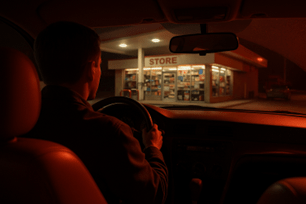
I drive UBER as a side gig. I love driving, it does not feel like work, and the money is literally laying on the street. And I could tell you dozens of stories about passengers, about where they were going, what they were talking about, and what kind of lives they are building.
Sometimes I see smart decisions, like people with no transportation taking an Uber to a job that will eventually let them buy a car, and I respect that kind of long game thinking.
I enjoy hearing people talk about dreams that they are actually turning into reality instead of just dreaming their lives.
But sometimes I see decisions that make me think twice, and then my mind does what it always does, it starts digging, because it needs to get to the ground of things. That is just me. And here is such an example.
THE STORE
One day I was driving and picked up someone in a high poverty area.
When they got in the car, I checked the address, to make sure it’s correct and the passenger said: “Yeah, to the store.”
That sentence did something to my brain, because when we pulled up, it was not a supermarket. It was a gas station with a big minimart, one of those places that now sells hot food, basic groceries, and everything you need if you are stuck in that radius.
And I watched them buy groceries like it was the most normal thing in the world.
I shook my head and simply thought it was strange. One of those whatever moments. But it kept happening. Always in low-income areas, often at night. It became a rather normal thing to watch.
And the thought didn’t go away. I started to wonder how much this phenomenon contributed to the poverty in those areas. And it dawned on me that it actually is a vicious cycle.
Reliable transportation is a high-dollar investment. If you are on a shoestring-budget and don’t have transportation, getting a vehicle is simply an impossible investment. It is easier to come up with that Uber money, and to go to “the store”. It is not only the money they spent on the Uber ride. It is also the higher prices you pay at gas stations.
THE WORD TRICK
You know, if you call it “the gas station,” your brain keeps the warning label attached.Most people will get triggered and avoid buying there unless it is necessary.
But if you call it “the store,” the warning label disappears, and the purchase feels justified because where else would you go but the “store.” That is not stupidity, that is cognitive framing, that is not laziness. Framing matters more than most people want to admit.
Not too long ago I had a conversation with a friend, and I mentioned my UBER observation. And he told me that they don’t do that. They go to the dollar store.
He and his family live in the country. 25 minutes away from the closest Walmart. But Dollar Generals are on every corner. A lot of people call them generally “the dollar store
“You think that’s cheaper?” I asked.
“It’s not bad”
So, I asked him much he thought is a pack of Sweet and low is at Dollar General. Maybe two to three dollars for a rather smaller pack? I thought that sounded rather expensive as I remember we used to get a 1,500-bulk pack of Sweet and Low at Sam’s club for under $20.
Yes, the dollar store is convenient, it is close, it suggests cheap – only a dollar. But the word dollar carries a promise it does not always keep. It’s the same word trick used for the gas station. The store becomes a Dollar Store, Dollar General, Dollar Tree, often used interchangeable
But what you don’t notice while you’re filling up that bag is how much smaller the packs are compared to a bigger supermarket. You don’t notice because the price of the pack is still cheaper than the bigger pack that is advertised at Walmart.
And you keep filling that basket and keep buying at the dollar store. Because they are closer to where a lot of lower income Americans live.
THE CALCULATION
I hated to bust his bubble that “the dollar store” wasn’t “bad”, but the following calculation made his jaw drop. At Dollar General, you can get a 100 pack for $3. Much cheaper than $5.37 at Walmart. You don’t do the math or think how big that Walmart package is. If you go mostly to the dollar store you may only go by ads you see. And who looks at the size? Big companies keep the entry price low by shrinking the package, but the actual per unit cost rises. We all fall for it. But at dollar general you pay 3 cents for each little Sweet and Low packet. At Walmart it’s just a little over 2cents. Because the pack for $5,37 is a 250 pack. And at Sam’s club it falls way under 1 cent per packet. Doesn’t sound much but buying the 1,500-packet bulk pack at Sam’s club is $14,58 whereas if you buy 1,500 packets at Dollar General, you pay $45. You save THIRTY dollars just buying Sweet and Low. The Sam’s Club membership for SNAP benefits recipients is only $20. You already saved money, just with this deal, if that would have been your next argument.
And you will reach the same calculation when it comes to other items. And it adds up.
That is structural extraction hiding inside package sizes and store locations.
And it is exactly the same pattern as the gas station becoming “the store,” just wearing different clothing.
THE POVERTY TAX
And then I stumbled over the term “poverty tax.” The term is not actually talking about an official tax.The term describes the recurring surcharge people pay because they are poor, because they lack transportation, because they are time constrained, and because the cheapest retail options are not located where they live.
The tax is the gap between what life costs when you can access bulk and competition, and what life costs when you are routed into convenience or necessity.
The problem is not new. I simply observed a rather well-known phenomenon in the corporate world, government and among researchers.
The USDA has literally asked the question in plain English: “Do the Poor Pay More for Food?” and they outline mechanisms like different store access and price variation that can raise costs for lower income households.
Other researchers and writers call the larger environment “food apartheid” and “supermarket redlining,” meaning disinvestment and store placement patterns that leave some neighborhoods with fewer affordable options. The term shifts attention to policy and planning choices, not personal failure, hiding behind language that’s sounds affordable.
Talking about language. When I hear someone call a gas station “the store,” I am not just hearing slang.I am hearing the system normalize the tax.
WHY THIS IS NOT JUST BAD BUDGETING
The cheap moral answer that I often hear is, “People mismanage their money.”
I even caught myself thinking that way at first, because it is the default American script.
But the longer I sat with it, the more I realized that this script is a lazy way to avoid looking at the map.
If the closest real supermarket is far, if you have no car, if you are working odd hours, if you are exhausted, if the bus routes are limited, then the gas station becomes the only store that fits the reality of your life.
That does not make the prices fair, it just makes the decision understandable.
So the “choice” is often between overpaying nearby or not having what you need.
You know, the real secret of being rich is not what most people believe it is. It is not about making more money. It is about spending less, and how lifestyle signals can trap people even when they look successful. And the poverty tax is the opposite side of that coin.
It is not about lifestyle signals, it is about forced inefficiency, where the system makes it hard to spend less even if you want to.
THE SYSTEM BENEFITS FROM THE TRAP
That’s when my brain lit up. Until then I was wondering how it is possible that gas stations multiplying on every corner. You didn’t see that many more cars on the streets. It is disproportional. But it suddenly made sense.
I already figured they make most of their money from hot food. Sometimes the hot food is not even that expensive, but they make their money on the “store” part, the groceries, the hot food, the convenience markups.
So the poverty tax is not an accident, it is a stable profit model.
And once people internalize the label, once they call it “the store” or the dollar store” the model locks in even harder because the purchase stops feeling like a ripoff and starts feeling like normal life.
TAXING YOUR SURVIVAL
If you are paying $30 extra on sweetener, and $10 extra on detergent, and $8 extra on trash bags, and you do that week after week, then the system is literally taxing your survival. That is what I mean by the poverty tax.
And I keep driving. I keep hearing “to the store,” and I keep watching what that store really is. And every time I pull off that curb, it hits me again: some people are not just working for a paycheck, they are working to pay the surcharge for being poor.
This hidden mechanism is a small, quiet drain that keeps households from ever building margin. I don’t know how to fix it. This poverty tax is quiet and hidden enough to feel normal until people like me stop seeing what I just described. Because I can drive away from “the store” and go home to my Walmart two minutes away.
 CHOOSE HUMANITY ANYWAY